




Court experts in the UAE

Court-appointed experts play a growing role in UAE, Majid Al Kabban talks about their expanding role, the risks and challenges in the current model and offers suggestion for reform to balance efficiency, justice and investor confidence.
The UAE’s judicial system is widely respected for its efficiency, modernisation, and ability to resolve disputes in a rapidly growing economy. One of its unique features is the role of court-appointed experts, professionals brought in to assist judges on technical matters such as construction disputes, engineering issues, or complex financial assessments.
This system is designed to help ensure justice by equipping judges with expert insights where highly specialised knowledge is required. However, in recent years, a growing reliance on experts has created both strengths and vulnerabilities in the process, raising important questions about the balance between efficiency and oversight.
The expanding role of experts in UAE courts
Traditionally, experts were brought in only where matters were too technical for a judge to adjudicate independently, for example, disputes involving construction defects, forensic accounting, or highly specialised engineering.
But today, experts are increasingly appointed in routine civil and commercial disputes, including straightforward contract cases and even property registration matters. Our observers have noted, on any given day during the month of August in 2025, anywhere between 70 – 85 per cent of the civil cases at the court of first instance were adjourned for either the appointment of an expert or for the submission of an expert report.
While this ensures technical accuracy in many cases, it has also created over dependence on a parallel system of private expert reports, making them, more often than not, the decisive factor in the final ruling.
Risks and challenges in the current model
The system works best when experts operate with full transparency, neutrality, and oversight. However, several challenges have been highlighted by practitioners and litigants:
- Limited oversight – Experts are typically private professionals or offices, not government entities, with limited external regulation. Their reports often carry decisive weight.
- Procedural gaps – Site visits or document requests are sometimes carried out without notifying both parties, leaving room for errors, omissions, or misinterpretation of key evidence.
- Judicial reliance – Judges frequently adopt expert reports in their entirety, especially at the court of first instance, without conducting independent verification when the dispute appears straightforward.
- Investor confidence risks – In a market like Dubai, where foreign investment is a cornerstone of economic growth, even a single instance of an inaccurate expert report can undermine confidence in the legal system.
A case study: When an expert report becomes decisive
Consider a recent property dispute handled by our firm. The issue appeared straightforward: a buyer, fully registered as an owner at the Dubai Land Department, discovered their property had not been transferred under a newly appointed developer after the cancellation of a project.
Instead of the court directly requesting ownership confirmation from the Land Department, an expert was appointed. The expert’s report concluded, incorrectly, that the buyer was not on the ownership list that was transferred to the new developer pursuant to the decision of the Special Judicial Committee for Incomplete and Cancelled Real Estate Projects. Crucially, the expert’s visit to the Land Department occurred without notifying the parties, depriving our client of the chance to present documentation and ensure accurate findings.
Despite clear evidence later obtained from the Land Department confirming ownership, the expert’s report stood, and the court declined to go beyond it, even during the subsequent appeals. The result: the client lost rights to a property they had rightfully purchased and was therefore denied any form of compensation.
This is not an isolated grievance; it highlights a systemic vulnerability in which a private expert, rather than the judiciary itself, effectively determined the outcome of a property dispute in one of the world’s most dynamic real estate markets.
Recent reforms and the path forward
To its credit, the UAE has already begun addressing these concerns. Recent reforms have:
- Increased expert fees to attract higher quality professionals.
- Established committees to oversee experts and provide oversight and punitive mechanisms.
- Signaled an intention to refine how and when experts should be appointed.
However, three key areas still need attention:
- Narrowing the scope of expert appointments – Experts should be reserved for genuinely technical matters, not routine disputes that fall squarely within judicial capacity.
- Enhancing transparency and oversight – Ensuring both parties are included in site visits, document reviews, and report preparations would mitigate errors and strengthen fairness.
- Setting higher standards and qualification requirements for court appointed experts – This should include a system designed to suspend experts that are found to be in repetitive breaches of the required standards.
Why this matters for investors
Dubai has earned a global reputation as a secure and transparent investment hub. But investor confidence relies heavily on confidence in the judicial system. If buyers believe that property rights can be lost due to procedural gaps or overreliance on third party experts, confidence in the real estate market, one of the pillars of Dubai’s economy, could be impacted.
As the UAE positions itself as a global leader in law, finance, and investment, ensuring that judicial reliance on experts complements rather than replaces judicial oversight will be critical to sustaining that confidence.
Text by:
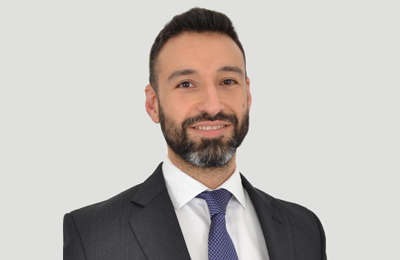
Majid Al Kabban, general manager, Al Kabban & Associates