




UAE – India’s second home for arbitration?
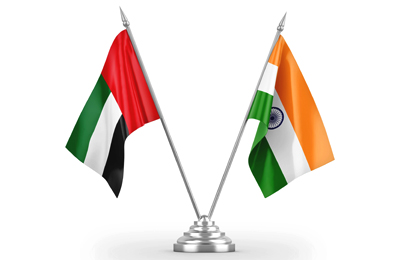
India-UAE trade flourishes, but there is a gap in legal reciprocity for UAE-seated arbitration awards. Sachin Kerur and Alison Eslick of Reed Smith urge India to recognise the UAE as a reciprocal territory for enforcement.
India and the UAE are already each other’s indispensable partners. In 2025, the UAE has become India’s second-largest trading partner.
India-UAE bilateral trade has reportedly surged to USD100.06 billion in FY25, up from USD72.87 billion in FY22, following the Comprehensive Economic Partnership Agreement (CEPA) signed on February 18, 2022, during a virtual summit between India’s Prime Minister Narendra Modi and UAE President His Royal Highness Sheikh Mohamed bin Zayed Al Nahyan. CEPA became effective on May 1 of the same year leading to a surge in trade between the two countries. Three years on, the CEPA has been hailed as a success story. Non-oil trade now accounts for more than half of the total trade, diversifying trade between the two nations. Millions of Indians also live and build businesses in the Emirates, which has emerged as a ‘home away from home’ for a vibrant Indian business community.
Yet one gap continues to hold back this relationship from reaching its full commercial and legal maturity: the enforcement of foreign awards in India is contingent on the reciprocal arrangement between India and the said country where the foreign award is rendered, however, India still does not recognise UAE as a reciprocal territory thus, India does not recognise UAE‑seated arbitration awards for direct enforcement under the New York Convention on the Enforcement of Foreign Arbitral Awards.
This fix is simple, surgical, and overdue. The Government of India simply needs to notify the UAE as a “reciprocal territory” for New York Convention awards under India’s Arbitration and Conciliation Act, 1996. Doing so would align the law with economic reality, giving Indian parties more choice to arbitrate their disputes in the UAE, and helping to anchor a second world-class arbitration hub for Indian disputes which is closer to home than the current ‘go to’ arbitration seat of Singapore.
Consider what is already in place. Over the last decade, the UAE has built a modern, pro‑arbitration legal ecosystem:
- The 2018 federal Arbitration Law is UNCITRAL‑based, limiting court interference and codifying global best practice.
- Clarity on enforcement steps for foreign awards and judgments came through Cabinet Decision No. 57 of 2018.
- Two common-law financial free zones—the DIFC in Dubai and the ADGM in Abu Dhabi—offer arbitration‑friendly courts, modern laws, and reliable pathways between onshore and offshore jurisdictions.
- Physical and digital infrastructure is world class: a leading global airport, abundant hearings facilities, and a post‑pandemic ecosystem of legal tech providers for eDiscovery, eBundles, transcription and seamless e‑hearings.
For Indian parties, the practical advantages are clear. Geography and connectivity matter: the UAE is a three‑to‑four‑hour flight from multiple Indian cities, with far more weekly direct frequencies than most competing arbitration hubs. For Indian businesses already operating in the Gulf, keeping arbitrations local saves time and money without sacrificing quality. For India‑based companies, the UAE offers a familiar business environment, deep Indian professional networks, and institutions they already trust—ICC and LCIA arbitrations seated in DIFC or ADGM are routine, and DIAC’s 2022 rules and new Arbitration Court mark a credible relaunch.
The disputes profile fits too: construction, real estate, commercial, distribution—exactly the sectors that dominate India–UAE trade and inward investment. Government entities in Dubai frequently mandate DIAC; Indian counterparties are already there.
Where the wheels still wobble is enforcement of UAE-seated awards in India. India applies the New York Convention to recognition and enforcement of awards made only in territories of states that are party to the New York Convention. However, despite both countries being New York Convention signatories, India has not yet issued the required Gazette notification to extend reciprocity to the UAE. As a result, arbitral awards seated in the UAE (including those from the DIFC and ADGM seats) are not currently enforceable in India under the New York Convention framework. By contrast, Singapore—understandably popular with Indian parties—has that status, making SIAC‑seated awards directly enforceable in India. This asymmetry nudges Indian parties away from the UAE even when it makes commercial sense to arbitrate there.
Ironically, India has already acknowledged the UAE’s legal reliability for court judgments by issuing a notification on January 17, 2020, declaring UAE to be a ‘reciprocating territory’ for the purposes of execution of judgments under section 44A of the Indian Civil Procedure Code, 1908. Thus, since January 2020, Indian courts have enforced UAE civil and commercial judgments (including DIFC and ADGM court judgments) under India’s reciprocal enforcement framework—without re‑litigating the merits. That milestone reflected two decades of bilateral work and trust. Extending the same recognition to arbitral awards is the natural next step.
Recognising UAE‑seated awards would deliver immediate benefits:
- Choice and competition: Indian parties could weigh SIAC against ICC/LCIA/DIAC on equal enforcement footing, driving better prices and service.
- Proximity and efficiency: Shorter travel, greater scheduling flexibility, and abundant regional support services reduce total dispute costs.
- Policy coherence: Enforcement of UAE court judgments is already reciprocal; aligning award enforcement closes an illogical gap.
- CEPA credibility: As India and the UAE target USD100 billion in trade, a clear, predictable dispute‑resolution corridor is essential to attract private investment.
- Strategic diversification: Singapore arbitration will remain a pillar. Adding the UAE as a recognised seat gives Indian businesses a second, complementary hub in their primary trade corridor.
What about concerns for Indian parties? DIAC’s restructuring under Dubai Decree No. 34 of 2021 did cause some uncertainty at the time, but DIAC moved swiftly to overhaul its rules and governance and is now on solid footing. In any event, parties are not captive to any single institution. Many already choose ICC or LCIA rules with DIFC or ADGM seats, benefiting from common‑law courts and modern arbitration statutes. Meanwhile, enforcement mechanics within the UAE—between onshore courts and the DIFC/ADGM—are well‑trodden and increasingly efficient.
The policy step India needs to take is straightforward. The Ministry of Law and Justice, Government of India simply needs to:
- Notify the UAE in the Official Gazette as a recognised ‘reciprocating territory’ for New York Convention award enforcement under Section 44 of the Arbitration and Conciliation Act, 1996.
- Issue practical guidance to high courts to streamline execution of UAE‑seated awards.
- Establish, with the UAE Ministry of Justice, a technical working group to monitor outcomes and share best practices.
India has already shown that it can move decisively when commercial logic is undeniable. Recognising UAE‑seated awards is a small administrative act with outsized impact. It would empower Indian companies with more choice, accelerate CEPA’s ambitions, and cement the UAE—India’s second home market—as a natural, nearby hub for Indian arbitration. It is time to turn the economic partnership into a fully reciprocal legal one.
Text by:

- Sachin Kerur, head of Middle East region, Reed Smith
- Alison Eslick, senior associate, Reed Smith