




The quietest person in the room

In an era of rising complexity for family offices, chief legal officer Gulfam Hussain explores why the most effective modern leaders are not the loudest voices, but the calm, disciplined decision‑makers who steady systems under pressure.
There’s a moment that many family offices will eventually face and probably more so now given the current geopolitical climate, for example, a key investment goes sideways, a dispute surfaces at the worst possible time, or a regulatory inquiry or data security issue lands without warning. In that moment, the spreadsheets, the governance documents and the carefully drafted investment policy statements become secondary. What will likely matter most, is the person in the room who decides how to respond.
I’ve watched some of these moments unfold and, in my view, the most reliable predictor of how well a business weathers a crisis is not the quality of its portfolio but rather it is the character of the people at the top.
THE LOUDEST VOICE
Does the squeaky wheel get the oil? Perhaps, but in the wrong environment probably gets everyone else covered in grease! As an introvert, I used to feel that speaking up meant value. Leadership, of course, demands courage and decisiveness, but in many organisations, I believe that can get distorted, with speaking eclipsing the more powerful discipline of listening. Nowhere can this distortion be more costly than in the management of a family office.
A family office is not a trading floor, nor is it a start-up chasing headlines. Its mandate is typically to preserve and grow wealth and legacy across generations, to protect the family from its own worst impulses under pressure, and to navigate the inevitable complexities of family life without allowing them to destroy what has been built. I firmly believe that requires a different kind of leader. Not necessarily the most visible person in the room but the most measured one.
The sector is growing at a rapid pace and this distinction matters more than ever. According to Deloitte, there are now around 8,000 single family offices globally which is up 31 per cent from 2019, with collective assets under management of USD3.1 trillion projected to reach USD5.4 trillion by 2030. As structures grow larger and more complex, the people operating them are under greater pressure and required to respond to a wide variety of issues covering a broad range of specialisms. The ones who perform best are not, in my experience, the ones who perform loudest.
In a recent Forbes article on quiet leadership Nadya Ramos states, “A quiet leader understands that their words and actions are a reflection of their character. The benefit of being a quiet leader is trust. When they speak, people listen because their voice hasn’t been diluted by overuse.”
In a family office context, that can be forceful. The senior executive whose every reaction is immediate, every opinion loudly asserted, and every setback treated as an emergency to be broadcast is, in my view, transmitting anxiety, which in the management of multi-generational wealth, can be contagious and expensive.
QUIET LEADERSHIP
It’s important to be precise here, because this argument is sometimes misread. Quiet leadership is not passivity or conflict avoidance.
Quiet leaders know when restraint will serve the moment and when decisiveness is required. They speak less often but when they do, their words carry weight precisely because they aren’t diluted by the constant noise of someone who needs to be heard. As Ramos notes, “Before I speak, I ask myself, ‘Is this about adding value, or just being part of the conversation?’ The hardest moments to stay silent are when emotions are high. Silence often diffuses situations faster than engagement.”
For me that’s a description of professional discipline, an ability to step back to take a bird’s eye view, and see exactly what’s required at the senior level of a family office, where the temptation to react can be overwhelming, and where the consequences of reactive decision-making can be long-lasting.
Lael Barry, founder of Ecolux Goods says, “Capability shows up in how you make decisions, set boundaries and build habits over time. Your voice matters most when it’s backed by consistency, not volume.” She described a moment when her silence was misread as weakness, but choosing not to respond publicly resolved the situation more quickly and more favourably than engagement would have. In the management of a family office, that’s a core competency.
Crucially, restraint shouldn’t become ambiguity and being quietly measured should not mean the absence of direction.
WHAT THE RESEARCH SAYS
A Harvard Business Review study found that introverted leaders can be up to 28 per cent more productive than their extroverted counterparts not because they work harder, but because they empower those around them to work better. According to Psychology Today reflective leaders tend to encourage idea sharing without dominating discussions, creating environments where people contribute their best thinking rather than performing for the most assertive voice in the room. I’ve witnessed the impact of this within my own team who feel comfortable in silence and confident in sharing ideas.
This research aligns directly with what makes family office management effective. The Bank of America 2025 Family Office Study found that more than three-quarters of family offices have principals who are moderately to extremely involved in day-to-day operations. When that involvement is channelled through calm, emotionally intelligent leadership, it’s a significant strength. When it slides into reactive, emotionally driven management, it can be the single greatest structural risk the family office faces and the one least visible on any governance document!
Emotional intelligence, specifically self-awareness and self-regulation, is among the most reliable predictors of leadership effectiveness in complex environments. A family office is about as complex as it gets since you’re managing assets, relationships, legal structures, generational dynamics, and confidential information simultaneously, across time horizons that stretch decades. A leader who can hold all of that together without being destabilised by any one part of it should be worth more to the family than any investment strategy.
CALM AS A GOVERNANCE TOOL
From a legal perspective, the temperament of senior management is an important consideration because it is embedded in how governance frameworks actually function under pressure.
Imagine a scenario where an investment committee convenes to discuss a significant loss in the portfolio. The documents establish the process but it’s the disposition of the people in the room that determines whether that process is followed or abandoned. A panicked CEO escalates to the family before the facts are established, triggering an emotional response that overrides rational decision-making. A measured one requests the full picture, takes the time the situation allows, consults the appropriate advisors, and presents the family with a clear assessment and a considered range of options. Same room, same documents, different outcome!
The Campden Wealth North America Family Office Report 2025 found that 69 per cent of family offices now have formal succession plans in place, but documents alone do not create institutional resilience. Documents in the hands of calm, disciplined leaders do. The same report flagged that the unpreparedness of family members and senior staff for succession remains one of the primary concerns in the sector. Having a structure without the right trustworthy people to operate it is like having the architecture without the foundations.
THE INVISIBLE GOVERNANCE LAYER
Within a family office environment, discretion is a quality that sits underneath everything I have described above and one that families rarely articulate explicitly but feel immediately when it is absent.
Family offices exist at the intersection of wealth and private life. Senior executives operating within them are privy to information that most professional environments would never require them to hold. For example, they know about the family member in financial difficulty, the relationship breakdown that is about to complicate the succession plan, or which branch of the family is considering legal action against another, months before it becomes formalised. They know things about the principal’s health, intentions, and fears that the principal’s own children may not know.
This places, on those individuals, an obligation of discretion that goes far beyond any confidentiality clause in an employment contract. It’s a professional and ethical posture that either exists in someone’s character or doesn’t. It cannot be trained in, and its absence, when a family’s private circumstances find their way outside the organisation, is almost always irreversible in its damage.
The quiet leader’s instinct to speak with purpose rather than volume is, in this context, not just a management style but rather a form of professional integrity. The executive who speaks only when they are adding value, who processes difficult information without broadcasting it, and who maintains composure in the face of complexity is someone who is demonstrating that they can be trusted with the things that matter most.
Every governance framework I’ve seen has visible components such as the investment committee, the family council, the charter, the succession plan, and the trust structure. These are the mechanisms that can be documented, reviewed, and enforced.
But I believe there’s an invisible governance layer that underpins all of it, and that layer is trust, referred to as “Amanah” in Islam, a foundational pillar of faith with accountability to God. The family must trust that the people operating the structure are doing so in the family’s interest and not their own. The senior management team must trust each other enough to have difficult conversations without ego’s getting in the way or those conversations becoming political. Advisors, must all operate with enough integrity that their advice is given honestly rather than shaped by commercial self-interest.
When trust is intact, governance frameworks perform as intended. Difficult decisions get made thoughtfully because the people making them feel secure enough to take their time. However, when trust breaks down, even the best drafted documents will struggle to hold the structure together. Baumel and Trippe in their book Deconstructing Conflict found that what makes conflict in family enterprise so intractable is not the specific disagreement but factors such as incompatible values, historical impasses built up beneath the surface over time and which are invisible to any governance document, brewing quietly until triggered. The measured executive who can read the temperature within the system brings tremendous value.
There are many stories of family offices with excellent governance documentation which don’t work as expected because a key executive behaved in a way that violated the family’s confidence. The Ocorian Family Office Study found that 86 per cent of family office professionals believe that ensuring governance meets the needs and expectations of family members remains an urgent and ongoing challenge. That’s usually read as a structural problem. I read it as both, a personnel and structural problem.
THE BOTTOM LINE
According to the Bank of America 2025 Study, one in three family offices expect to transition control within the next five years. That process is a long exercise in preparing both the structure and the people within it for change.
The families who build enduring family offices choose people they trust completely. People whose word is reliable and whose conduct is consistent.
The sector is growing and structures are becoming more sophisticated. Regulatory environments across major jurisdictions are evolving to support more formal, institutional approaches to family wealth management. All of that is a good thing.
However, no governance framework, however well drafted, will compensate for the wrong person in a senior role. The families that are building enduring offices choose leaders who are calm under pressure, discreet by nature, and trusted without reservation. Leaders who do not need to be the most prominent figure in a room and who understand, as the research on quiet leadership increasingly confirms, that authority built through consistency and character outlasts authority built through noise.
Text by:
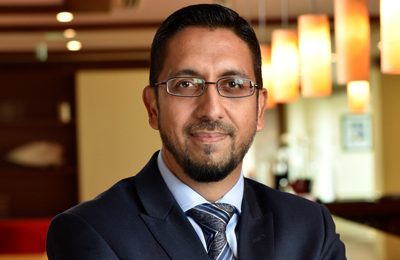
Gulfam Hussain, chief legal officer