




Capital’s new corridor
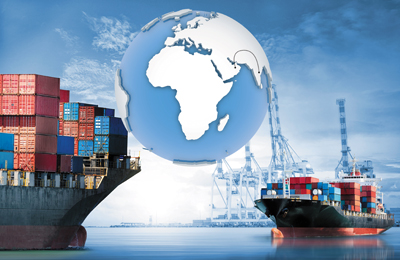
Vinodh Kumar, resident partner of DSK Legal, examines how the India–UAE corridor is evolving into a strategic capital, trade and legal axis in an era of geopolitical realignment.
One of the oldest rules in business remains disarmingly simple: follow the capital. In today’s financial architecture, however, capital does not merely flow — it is routed, deliberately structured, and anchored across jurisdictions selected for tax efficiency, enforcement certainty, and regulatory predictability. The structuring layer between origin and destination has become as consequential as the capital flows themselves. What becomes instructive, therefore, are sustained patterns of activity where capital persistently arrives and how it is structured, which begin to reveal the pathways it is taking.
Nowhere is this more evident than in the India–UAE corridor, which over the recent past has evolved from a conventional bilateral trade route into a multi-layered capital and structuring ecosystem. The significance of this shift lies less in its scale than in its velocity. It is unfolding faster than most businesses, and indeed legal frameworks, have been able to adapt. It is precisely this asymmetry between the pace of capital and the speed of institutional response that renders the corridor both understated and materially underutilised and, for those who recognise it early, disproportionately valuable.
The macro data confirms the direction of travel. Bilateral trade surpassed USD100 billion in FY 2024–25, much earlier than anticipated, reflecting year-on-year growth of 19.6 per cent. In January 2026, the two governments committed to doubling that figure to USD200 billion by 2032.
FROM TRANSACTIONAL TO STRATEGIC ARCHITECTURE
Until recently, the India–UAE relationship was largely linear: hydrocarbons, gold, manpower, and, structurally, the UAE functioning as an intermediate node in capital-routing chains, often after Singapore or Mauritius. It was a jurisdiction where capital paused on its way elsewhere.
There has been a paradigm shift over the past couple of years. The UAE now operates as an active allocator of capital into India’s regulated sectors, while Indian capital is increasingly using the UAE as a platform for global expansion. The relationship has moved closer to co-investment than to trade: the UAE contributes liquidity, logistics, and capital aggregation; India contributes market scale, operating depth, and manufacturing capacity.
This shift is underpinned by a deeper layer of state alignment. The India–UAE Comprehensive Strategic Partnership now spans defence, food security, digital infrastructure, and connectivity initiatives such as the India–Middle East–Europe Economic Corridor. At the operational level, the Comprehensive Economic Partnership Agreement (CEPA), in force since 2022, has begun to reshape trade and supply-chain structuring, particularly through rules of origin, tariff optimisation, and regional distribution models, bringing it into direct relevance for M&A, joint ventures, and platform investments rather than remaining confined to customs analysis. In January 2026, the two countries advanced cooperation through letters of intent covering a Strategic Defence Partnership, joint space infrastructure development between IN-SPACe and the UAE Space Agency, and UAE participation in the Dholera Special Investment Region. The India–UAE Bilateral Investment Treaty, signed in February 2024, entered into force in August 2024.
In cross-border practice, political alignment of this depth is often the most reliable lead indicator of future capital flows.
A MULTIDIMENSIONAL CORRIDOR
The corridor is now operating across four distinct axes, each with its own structuring logic and legal and regulatory underpinnings.
Axis 1: Sovereign and institutional capital — UAE to India
UAE FDI into India stands at approximately USD23 to 25 billion cumulatively until September 2025, against a broader USD75 billion infrastructure commitment now converting into deal flow. Emirates NBD’s approximately USD3 billion investment into RBL Bank, the largest FDI in Indian financial services to date (subject to regulatory approvals), was aligned with the India–Middle East–Europe Economic Corridor. International Holding Company made a USD1 billion strategic investment into Sammaan Capital. Mubadala (along with other investors) acquired an 8 per cent stake in Manipal Health Enterprises in February 2024. ADNOC Gas entered into a USD3 billion, ten-year LNG agreement with Hindustan Petroleum Corporation Limited. DP World has committed an additional USD5 billion to Indian maritime infrastructure.
These transactions are not merely directional indicators: they reflect a shift in risk appetite and control orientation. UAE capital is no longer participating as passive financial investor but is underwriting regulated-sector exposure in India with board-level involvement and long-term positioning. The structuring implication is clear: these investments require alignment not just on capital deployment, but on governance, enforcement pathways, and exit visibility at the outset.
Abu Dhabi Investment Authority’s GIFT City presence anchors broader infrastructure exposure through platforms such as Cube Highways and National Investment and Infrastructure Fund, while UAE-domiciled private credit funds are emerging as incremental lenders to mid-market Indian credits. Increasingly, the same channel also routes European and other global fund-manager capital into Indian equity and credit through DIFC and ADGM feeders, signalling a capital aggregation hub extending beyond the bilateral corridor.
Axis 2: Platform capital — India to UAE
In 2025, India became the UAE’s leading source of greenfield FDI, with USD12.58 billion across 275 projects, albeit heavily concentrated in a single announced commitment — Erisha E Mobility’s USD10 billion smart manufacturing hub at RAKEZ, which is yet to convert into deployed capital. Beneath that headline, 18,486 Indian-owned companies joined the Dubai Chamber of Commerce in 2025, reflecting an 11 per cent year-on-year increase.
Indian promoters and family offices are increasingly using UAE HoldCo structures — often DIFC Prescribed Companies or ADGM SPVs — both as outbound platforms for investment into Africa, the GCC and Europe, and as vehicles for direct global market access. These structures enable currency hedging, capital mobility, and a tax-efficient base. The UAE Golden Visa further anchors long-term capital and talent migration. This is not expansion — it is strategic redomiciling of Indian capital for a globalised operating model.
Axis 3: Operating and real-economy integration
Bharat Mart — DP World’s 2.7 million square foot Indian trading hub at JAFZA, expected to open by end-2026 — anchors the trade infrastructure backbone, alongside the Nhava Sheva Business Park. The I2U2 Food Corridor channels approximately USD2 billion of UAE capital into Indian food-processing infrastructure, supporting the UAE’s food security strategy.
Indian-origin developers such as Sobha Realty and Danube Properties are shaping significant portions of Dubai’s residential landscape, while Indian healthcare, education, and retail platforms are scaling regionally.
Axis 4: Legal and infrastructural integration
India’s notification of the UAE under Section 44A of the Code of Civil Procedure 1908 enables direct enforcement of UAE court judgments in India, including those of the DIFC and ADGM Courts. On financial infrastructure, UPI–AANI, with an addressable population of c. 3.5 million Indian residents in the UAE, alongside local-currency settlement mechanisms, is reducing reliance on USD clearing.
Note on arbitral award enforcement: UAE-seated arbitral awards do not currently benefit from a streamlined enforcement pathway into India. India has not notified the UAE under Section 44(b) of the Arbitration and Conciliation Act 1996, meaning UAE-seated awards are not recognised as “foreign awards” under that Act.
The corridor is already operational. The question is whether its legal grammar is evolving quickly enough to sustain the capital now flowing through it.
A CORRIDOR THAT HAS OUTGROWN ITS LEGAL ARCHITECTURE
It has not. The gap is no longer cosmetic, and it is now a pricing inefficiency embedded in cross-border execution.
Despite the volume of deal flow, the India–UAE corridor has yet to develop a familiar structuring blueprint comparable to other high-activity corridors. The Singapore–India corridor has, over two decades, developed a clear operating shorthand: Singapore HoldCo, SIAC seat, English-law documentation. The UK–India corridor carries its own established playbook. The India–UAE corridor, notwithstanding comparable structural depth, has yet to converge around an equivalent framework, even though the underlying building blocks are now firmly in place.
The cost manifests as structural rework. Transactions are often initiated on generic Singapore-HoldCo assumptions, only to be revisited during diligence when substance, treaty access, and enforcement are properly interrogated. Structuring remains fragmented across otherwise comparable deals — DIFC in one instance, ADGM in another, mainland UAE in a third — frequently driven by adviser familiarity rather than deliberate design.
Regulatory friction compounds this. Indian-side constraints — FDI sectoral caps, ODI conditions, RBI reporting — interact with UAE-side requirements around licensing, AML compliance, and notarial practice. None of this is insurmountable. But it demands advisors capable of operating seamlessly across both jurisdictions, and that bench remains thinner than the current volume of deal flow requires.
Structures that succeed are those that consciously balance tax, control, speed, and regulatory certainty, with explicit acknowledgement of trade-offs. Those that fail almost invariably reflect misallocated objectives — optimising for tax at the expense of control and exit or treating substance as an afterthought.
WHAT THE CORRIDOR REVEALS ABOUT CAPITAL IN UNCERTAIN TIMES
Geopolitics sharpens, not blunts, the corridor’s relevance. As capital flows fragment, investors have become more deliberate: jurisdictions are selected with intent, protections are sequenced rather than retrofitted, and legal certainty is priced alongside commercial return.
Three patterns are increasingly visible. First, capital prefers neutral jurisdictions — the UAE has emerged as a politically stable, tax-coherent, and legally hybrid platform for global capital. Second, capital separates origin from control: the jurisdiction through which capital is deployed is increasingly distinct from where it originates. Third, where enforcement, structuring, and regulatory clarity lag, capital either absorbs friction or diverts altogether.
In that context, the India–UAE corridor is in active competition with the India–Singapore, India–UK, and broader India–EU routes — perhaps not yet on trade volumes, but certainly on capital mobility and legal certainty.
India offers scale, demographic depth, and a growth-oriented policy trajectory. The UAE offers capital aggregation, jurisdictional neutrality, and structuring flexibility. The two are not substitutes, but interdependent and complementary components of a single, increasingly strategic capital corridor.
REWRITING THE STRUCTURING PLAYBOOK
 The structuring playbook is being rewritten. The default Singapore-HoldCo solution no longer survives rigorous diligence: the Third Protocol to the India–Singapore tax treaty removed the residence-based capital gains exemption for shares acquired on or after April 1, 2017, with full source-based taxation in India applying from April 1, 2019, and treaty access is now conditioned by a Limitation of Benefits clause.
The UAE position is structurally distinct. A 9 per cent corporate tax regime, combined with the Qualifying Free Zone Person (QFZP) framework delivering 0 per cent on qualifying income where the applicable conditions are met, a generally favourable capital gains position under the India–UAE treaty, and a standalone Bilateral Investment Treaty providing investor protection, together create a differentiated structuring environment. For groups with consolidated revenues above EUR750 million, the QFZP analysis operates within the broader OECD Pillar Two framework, and the interaction between the QFZP regime and the 15 per cent global minimum tax warrants specific advice. This is, in all cases, subject to substance, beneficial ownership, permanent establishment risk, GAAR, and treaty-access analysis.
Five structuring disciplines now define execution quality in the corridor:
- DIFC and ADGM as primary structuring conversation, not Singapore afterthought. For new capital — especially UAE-linked or GCC-exposed investments — DIFC and ADGM should be part of the initial structuring conversation. Their court judgments now travel directly into India under India’s notification of the UAE under Section 44A of the Code of Civil Procedure 1908.
- Dispute architecture determined at entry, not at breakdown. Seat selection is an enforcement decision. DIFC and ADGM Court jurisdiction offers a direct India enforcement pathway for money judgments. For arbitration, Singapore and London remain the established options for India enforcement. UAE-seated arbitral awards do not currently benefit from a streamlined India enforcement route: India has not notified the UAE under the Arbitration and Conciliation Act 1996, and the practical workaround of converting an award to a UAE court judgment before enforcing under Section 44A carries material additional cost and delay. That position requires deliberate structuring at the outset.
- CEPA as a transactional instrument, not a customs silo. The Comprehensive Economic Partnership Agreement belongs in transactional diligence. Rules of origin and tariff optimisation provisions have direct implications for warehousing, distribution, and contract-manufacturing structures — including post-acquisition integration models where, for example, a UAE-based distribution platform sources from an Indian manufacturing entity. CEPA is already influencing valuation assumptions in deals with a supply-chain dimension, and advisers who treat it as a customs matter rather than a structuring consideration are leaving value on the table.
- Regulatory assumptions stress-tested at term-sheet stage. The cost of early analysis is marginal. The cost of deferring it rarely is.
- Substance planned, not retrofitted. Beneficial ownership, GAAR exposure, permanent establishment risk, and treaty-access conditions require deliberate structuring from the outset. Optimising for tax at the expense of control and exit is the most common failure mode in the corridor.
The corridor still faces a relative shortage of advisors equally fluent in Indian and UAE regulatory systems, and execution often depends on stitching together expertise across jurisdictions. Until that bench deepens, some friction will remain structural rather than incidental.
FOLLOW THE STRUCTURE, NOT JUST THE CAPITAL
The traditional advice was to follow the capital. That advice has evolved. Capital does not merely flow — it is designed. To follow capital today is to follow the structure that carries it: the holding jurisdiction, the dispute seat, the treaty framework, and the enforcement pathway. The India–UAE corridor is no longer a supporting route within a broader architecture — it is increasingly becoming the architecture itself.
All four axes are now aligned. Sovereign capital is taking control positions in India’s regulated sectors; Indian capital is deploying outward through UAE platforms; the operating economy is integrating across both markets; and the legal and infrastructural framework is maturing, albeit with gaps — most notably the unresolved arbitral award enforcement position — that require deliberate structuring to navigate.
The remaining variable is execution — whether legal architecture evolves at the same pace as capital. That requires the discipline of structuring, drafting, negotiating, and enforcement, undertaken by counsel capable of operating seamlessly across both jurisdictions.
For investors and operators making allocation decisions today, the proposition is straightforward. The India–UAE corridor is no longer peripheral, nor merely an alternative to a Singapore default. It is the primary axis along which India and the UAE are building and deploying capital together — and increasingly, the axis that will define the next decade of cross-border investment.
Those who structure through it deliberately will not just participate in corridor capital — they will define it.
Text by:
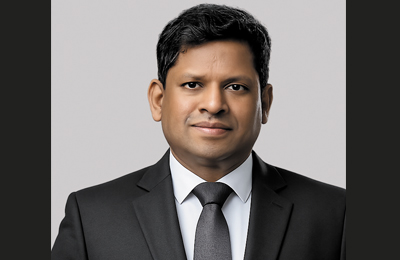
Vinodh Kumar, resident partner, DSK Legal UAE
—
Disclaimer: This article is intended for general informational purposes only and does not constitute legal advice. The content reflects the authors’ analysis of publicly available information as at the date of publication and should not be relied upon as a substitute for specific legal advice in relation to any particular matter. Readers should seek independent legal counsel before acting on any information contained herein. The views expressed are those of the authors and do not represent the views of any firm, institution, or publication.