




Lessons for the UAE Carbon Market

An analysis by Kalantar Business Law Group on how the UAE is advancing its national carbon regulatory framework to reach net-zero emissions by 2050, and how leveraging insights from the EU’s experience can be useful for building an efficient carbon market.
A NEW NATIONAL CARBON REGULATORY REGIME
In 2024, the government introduced landmark climate legislation consisting of a new Federal Decree-Law No. 11 of 2024 (effective May 30, 2025) (Federal Climate Law) and a Cabinet Resolution No. 67 of 2024 (Carbon Credit Resolution) establishing a National Register for Carbon Credits (NRCC). These initiatives aim to cap or reduce greenhouse gas (GHG) emissions by requiring large emitters to measure and report their emissions and facilitate voluntary reporting from smaller emitters. Importantly, they also introduce a legislative framework for a voluntary carbon trading market.
A carbon market, which allows entities an opportunity to offset emissions through the purchase of credits generated by verified and approved carbon reduction or mitigation projects, is an important step to tackling climate change. Other jurisdictions such as the EU, have operated carbon markets since 2005.
The Carbon Credit Resolution took effect on December 28, 2024, and provides a grace period until June 28, 2025, for companies to comply. It applies across the UAE (including free zones) to:
- High-emitting entities: Companies emitting 0.5 million metric tons or more of CO₂-equivalent annually must register and report their emissions (these are termed “Entities of Huge Carbon Emissions”);
- Voluntary participants: Companies below that threshold can opt in as “Participating Entities” to register and trade credits; and
- Trading platforms: Carbon credit trading exchanges will be regulated by the Securities and Commodities Authority (SCA) to ensure proper oversight.
Together with the Federal Climate Law’s provisions, which include setting sectoral emission targets, robust monitoring, reporting and verification (MRV) requirements and incentives for carbon trading, the UAE is laying the foundation of a domestic carbon market that, it is hoped, will require emitters to either verifiably reduce their emissions or help fund reforestation and other CO₂ reduction projects. Although the Carbon Credit Resolution itself does not include details on the operationalisation of the NRCC, the current expectation is that once fully deployed it will adopt a market-based policy of “cap and trade”, potentially similar to the EU’s Emissions Trading System (EU ETS).
WHAT IS A “CAP AND TRADE” SCHEME?
“Cap and trade” schemes have been shown to be a cost-effective way of reducing greenhouse gas emissions. To incentivise firms to reduce their emissions, the government sets a cap on the maximum level of emissions and creates tradable allowances for each unit of emissions allowed under that cap. Emitting firms must obtain and surrender an allowance for every unit of their emissions. They can acquire allowances from the government or through trading with other firms. The government may choose to give the allowances away for free or to auction them. Firms that expect a shortage of allowances must either cut back on their emissions or buy them from another firm. For a given allowance price, some firms will find it easier, or cheaper, to reduce emissions than others and will sell allowances.
Conversely, firms that can reduce emissions at lower cost may end up with excess allowances and can sell them. If too many allowances are offered for sale (because many firms find it easy to cut emissions), the price of allowances will decline, reducing the incentive for further emission cuts. However, if allowances are scarce, the price of a tradeable allowance will rise, and high-cost emitters will be economically incentivised to reduce emissions. This market mechanism continues until the number of allowances that low-cost reducers want to sell equals the number that high-cost emitters need to buy, that is, until supply and demand balance at an equilibrium carbon price. In this way, trading establishes a unique carbon price and drives emissions down to the capped level at the lowest overall cost.
Of course, it is not certain that an allowance price that clears the market at a point in time will continue to do so in the future. As economic conditions and emitting firms’ circumstances change, allowance prices will fluctuate, becoming more expensive when demand is high relative to supply (for example when the economy is growing robustly) and cheaper when demand is lower (for example when ample renewable electricity reduces the requirement for expensive reduction strategies, such as carbon capture).
LESSONS FROM THE EU ETS
The EU ETS is one such “cap and trade” market. The outline of the NRCC provided in the Carbon Credit Resolution suggests that the NRCC may operate much like the EU ETS once scaled, in which case the UAE can gain valuable insights from the EU ETS experience over the past two decades. In particular, Phase I of the EU ETS (2005–2007) was a pilot or “learning by doing” phase that revealed pitfalls and best practices in establishing a carbon market. Below, we outline some key lessons from EU ETS Phase I and discuss their relevance to the UAE’s emerging carbon regime.
- Robust data collection and MRV systems
A significant achievement of EU ETS Phase I was the establishment of a reliable system for MRV. Every regulated facility was required to measure its emissions and report verified data annually, which built trust in the system’s environmental integrity. Phase I effectively “built and tested the infrastructure to monitor, report, and verify emissions”[i] throughout the EU. The Federal Climate Law and the Carbon Credit Resolution appear to recognise the importance of MRV. The UAE should similarly prioritise rigorous MRV through the Ministry of Climate Change and Environment (MOCCAE) platform and the NRCC. Recent advances in climate science should facilitate faster adoption of MRV systems with more reliable data outputs. The Federal Climate Law also adopts the GHG Protocol and Intergovernmental Panel on Climate Change methodologies, which are the international standards of choice.
- Cap setting and ensuring carbon price scarcity
The EU’s initial approach to cap-setting provides a cautionary tale about overallocation. In EU ETS Phase I, EU member states set emissions caps based on inflated estimates due to a lack of reliable data, resulting in an oversupply of allowances. By 2007, it became evident that the total allowances issued exceeded actual emissions, causing the carbon price to plummet and Phase I allowances becoming nearly valueless, trading at around €0 by 2007. This oversupply undermined the incentive for companies to reduce emissions. The lesson for the UAE’s NRCC is to carefully set emission caps or issuance of allowances at conservative levels based on reliable data. Whether the UAE adopts a comprehensive cap-and-trade scheme or implements crediting baselines for issuing offset credits, the supply of allowances or credits must align with actual emissions data and the country’s climate targets. Avoiding overallocation is crucial to maintaining a meaningful carbon price signal and the success of the regime.
To achieve this, the UAE may start with strict baselines (perhaps using 2019 as the baseline year, as mentioned in the Carbon Credit Resolution) and consider a Linear Reduction Factor or a similar mechanism to tighten the cap or baseline over time. Ensuring that allowances or credits become rarer each year, such as by reducing the cap in line with interim Nationally Determined Contributions goals, will help carbon prices rise to levels that deter excess emissions. The EU experience also suggests introducing mechanisms to manage carbon market stability. The EU implemented a Market Stability Reserve in 2018 to address the surplus of allowances from Phases I and II by temporarily adjusting supply. This involves removing excess allowances from the market and reintroducing them to the market at a later stage once allowances become scarce and prohibitively expensive. As with the Market Stability Reserve of the EU ETS, the UAE could take precautions to monitor market liquidity and be prepared to deploy a reserve mechanism to prevent extreme price fluctuations impact market integrity.
The UAE’s cap or credit issuance strategy should therefore lean towards scarcity, creating genuine economic pressure to cut emissions, rather than generosity, which could lead to overly deflated carbon prices and a tendency for companies to offset cheaply instead of investing in actual emissions reduction.
- Allocation vs. Auctioning of credits
During EU ETS Phase I, almost all emission allowances were allocated for free (grandfathered based on past emissions). While this approach eased industries into the system and addressed competitiveness concerns, it had its drawbacks. Some power companies achieved windfall profits by receiving free allowances and then charging customers as if carbon had a cost that warranted passing on to end-users, resulting in no revenue for governments that could be used for climate programs. By Phase III (2013), the EU shifted towards auctioning allowances as the default method. Auctioning ensures adherence to the “polluter pays” principle because it requires emitters to purchase allowances, making them financially accountable for their pollution. Rather than being gifted the right to emit, companies must internalise the cost of emissions, creating a direct economic incentive to reduce them. Moreover, auctioning raises public revenue that can be reinvested in sustainability projects and climate mitigation initiatives.
For the UAE’s NRCC, a balanced allocation strategy will be important. Initially, the government may opt to allocate some credits or allowances for free or as rewards for early participation. This can help engage industry participants and mitigate concerns about international competitiveness (carbon leakage) which is a situation where companies, facing higher carbon costs at home, relocate operations to jurisdictions with weaker climate policies, resulting in no overall reduction in global emissions. Free allocation in the early stages can help manage this risk while the domestic market and regulatory regime mature.
Over time, however, the UAE should consider transitioning to auctioning a significant share of allowances or credits in order to facilitate price discovery and enhance the integrity of the carbon market. Auctioning not only ensures that emissions carry a visible cost; it also supports efficient capital allocation and encourages long-term investment in low-carbon technologies. Auctioning also aligns directly with the Federal Climate Law’s stated objective of creating a clear and credible carbon price signal.
- Use of offsets and market linkages
The EU experience highlights the importance of quality control in carbon offsets. In Phase II (post-2008) of the EU ETS, companies were allowed to purchase international offset credits from the Clean Development Mechanism and Joint Implementation for compliance. These are two mechanisms established under the Kyoto Protocol to certify emissions reduction projects: the Clean Development Mechanism for projects in developing countries, and the Joint Implementation for projects in industrialised nations with Kyoto commitments. However, during the later years of Phase I, a surge of inexpensive offsets and credits from outside the EU ETS compliance system flooded the ETS market. Many of these low-cost credits, often issued under poorly verified projects, led to oversupply and suppressed carbon prices.[ii]
The Federal Climate Law and the Carbon Cabinet Resolution do not specify whether credits generated from sustainability projects will need to be from UAE based projects but this is unlikely. It is probable that credits verified by, and registered with, internationally recognised institutions, such as Verra, Gold Standard, Climate Action Reserve and American Carbon Registry, may be eligible for trade on the NRCC. This approach aligns with international practice and avoids the need to create a domestic verification system from scratch.
It is hoped that shortcomings in credit methodologies—especially around whether projects genuinely and measurably remove or reduce CO₂ will continue to be addressed by advances in climate science. Scientific progress, coupled with emerging technologies, should result in credits of higher integrity, grounded in rigorous verification and data. Only under such conditions can carbon credits function as legitimate offsets and hold real value in a cap-and-trade scheme.
- Enforcement and compliance incentives
Effective enforcement of non-compliance is important to the credibility and effectiveness of the new regime. The EU ETS established a strong precedent with strict penalties for non-compliance: in Phase I, companies that failed to surrender enough allowances to match their verified emissions were liable for fines of €40 per excess ton of CO₂, increasing to €100 per ton in Phase II. These penalties were set well above the market price of carbon to deter companies from opting to pay fines instead of purchasing allowances. Additionally, non-compliant companies were required to make up the shortfall in the following year’s allowance surrender, ensuring that non-compliance was never financially beneficial.
The UAE’s climate regime aims to introduce a strong enforcement framework. Under the Carbon Credit Resolution, the SCA is empowered to impose fines up to AED 1 million for violations (e.g. failing to register or false reporting), and it can suspend an entity’s ability to trade carbon credits for breaching relevant regulations. There is also the potential for suspension of business licenses in cases of serious non-compliance. However, it remains to be seen whether the UAE will adopt per-ton emissions exceedance fines (as the EU did) for emissions beyond an entity’s cap that are not offset by credits. Such per-ton penalties could further ensure that paying a fine is always more expensive than actually reducing or offsetting the emissions.
- Transparency and public disclosure
One of the notable strengths of the EU ETS has been its transparency. Data on emissions and compliance is publicly accessible through mechanisms like the EU Transaction Log and periodic reports. This transparency enables analysts, investors and the public to evaluate what emitters say and do, fosters confidence in the system and facilitates informed policy adjustments. The UAE should strive for similar transparency within its regime by utilising the NRCC and the MOCCAE’s reporting platform to publish aggregated information on emissions trends and carbon credit usage. While specific company data may occasionally be sensitive, the system can still report, on an annual basis, sector-wide caps and emissions, baseline CO₂ measures, total credits issued and retired, and the identity of mandatory and voluntary reporters, among other metrics. Transparent reporting will also allow regulators and market participants to identify issues—such as surges in credit supply or sectors that are lagging in reducing emissions—while signalling the UAE’s commitment to an open, credible and scalable system.
CONCLUSION
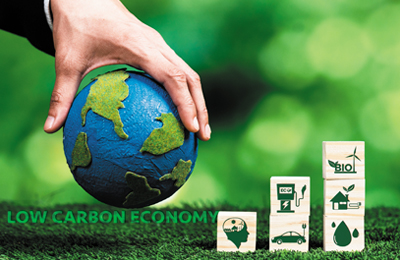 The UAE’s new carbon regulatory regime, captured in the Federal Climate Law and the Carbon Credit Resolution, marks a significant turning point in the country’s approach to addressing climate change. By establishing a national carbon market and obligating major emitters to monitor, report and reduce GHG emissions, the UAE is creating the regulatory architecture necessary for a transition to a low-carbon economy. However, the regime is in its early days, and much remains to be built in order to:
- enforce mandatory participation by the biggest emitters;
- incentivise voluntary participation by other emitters;
- establish baselines and set caps, including separating the aggregate cap into components for different sectors (e.g. oil and gas, construction, transportation, electricity production) and developing sector-specific guidelines;
- define the rate at which the caps should reduce over time;
- identify government programs and sustainability projects to which proceeds of the sale of credits can be allocated;
- set credit standards relating to the eligibility of credits available to be traded;
- determine the quantum and distribution of free allowances and establish an auctioning scheme; and
- implement the all-important MVR regime.
Further detailed regulations and guidance are expected from MOCCAE in the coming months.
The lessons from the EU ETS provide a valuable roadmap for the UAE’s journey: avoid overallocation and ensure a robust carbon price; use auctions and market design to drive innovation and reinvest in climate solutions; and maintain strict oversight and data transparency. This means businesses in the UAE will soon need to consider integrating climate compliance into their core strategies, from installing emissions monitoring systems to preparing to trade carbon credits as part of their financial planning and risk management. By taking these steps, the UAE will not only advancing its own climate goals but also set an example in the Middle East of how a former petrostate can earnestly pivot toward a climate-resilient, net-zero future.
The UAE enters this phase with certain advantages—most notably, a stronger scientific and institutional baseline than what the EU had in 2005, supported by the early alignment with the GHG protocol for emissions accounting. However, maintaining credit scarcity, limiting free allocations, and implementing a well-calibrated linear reduction factor will be essential to preserve the integrity of carbon pricing. Auctioning allowances, where feasible, could also raise revenue to support clean energy and climate innovation. Market liquidity will also benefit from a balanced mix of high-quality domestic offsets and international linkages so long as robust quality controls are upheld. Lastly, sectoral caps, a price stability mechanism, and carbon border measures may further strengthen the system.
Text by:

- Hessam Kalantar, managing partner, Kalantar Business Law Group
- Poulad Berenjforoush, associate, Kalantar Business Law Group
- Sophia Booth, legal intern, Kalantar Business Law Group
—
Footnotes:
[i] European Commission, Development of EU ETS (2005–2020), published by the European Commission – Directorate‑General for Climate Action, available at: https://climate.ec.europa.eu/eu-action/eu-emissions-trading-system-eu-ets/development-eu-ets-2005-2020_en (accessed 21 July 2025).
[ii] In carbon markets, “additionality” refers to the requirement that a project’s emissions reductions would not have occurred in the absence of the incentive created by the carbon credit system. If a project lacks additionality (i.e. “dubious additionality”), it means the project’s emission reductions might have occurred anyway or are not reliably quantified, calling into question the validity of the credits it generates