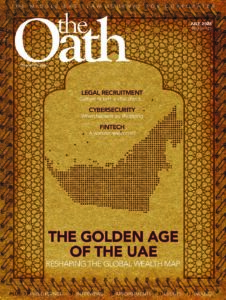





The golden age of the UAE
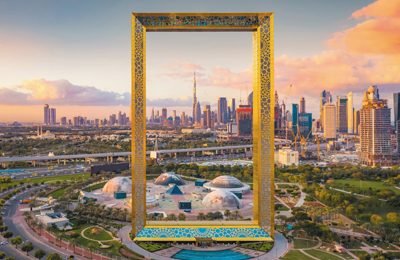
The UAE is emerging as a global wealth hub, attracting wealthy individuals and professionals with its strategic initiatives, including the Golden Visa. Stephenson Harwood talks about how the country is reshaping the global wealth map and offering unparalleled opportunities.
The global wealth map is being redrawn, with the Middle East, in particular, the United Arab Emirates (UAE), taking centre stage. We are experiencing a higher volume of wealthy individuals, family offices, entrepreneurs, and skilled professionals arriving in the UAE than ever before. Henley & Partners’ recently published Private Wealth Migration Report projects a net inflow of 9,800 millionaires to the UAE in 2025, placing it at the top of the global millionaire migration rankings for the third consecutive year. The UAE has experienced waves of immigration before, but the demographics and the motivations of those arriving has changed with more focus on the UAE as a long-term base.
The statistics are a product of design. Over recent years, the UAE government has implemented various strategic measures to attract wealthy expatriates, including developing its transport, healthcare and education infrastructure as well as reforming laws for succession planning and wealth structuring locally, including wills, trusts and foundations, which are seen as “expat friendly”. However, the reform of the immigration system and the introduction of the Golden Visa – a long-term residency programme designed to attract investors, talented professionals, and entrepreneurs is the single biggest contributor to the surge in wealth migration, unlocking the UAE’s potential. Anyone considering relocating to a new country with a dynamic, globally connected environment and favourable tax system will likely have the UAE on their radar.
The “pull” factors to the UAE are just one side of the equation however and it is clear from speaking with our clients that there is no shortage of “push” factors from their home countries driving the influx of wealth and talent to the UAE.
THE GOLDEN VISA: GATEWAY TO OPPORTUNITY
The cornerstone of the UAE’s pro-wealth strategy is its Golden Visa regime. The Golden Visa was introduced in 2019, and grants long-term renewable residency, of 10 years, to a diverse range of individuals including investors, entrepreneurs, skilled professionals, scientists, creatives, and students.
While several European countries offer Golden Visa schemes, they are becoming increasingly restrictive. Portugal, for example, has tightened its real estate qualification criteria, and Ireland terminated its Immigrant Investor Programme in 2023. The UAE meanwhile has taken steps to make the Golden Visa more accessible reducing the threshold investment criteria in 2022, and it remains a popular choice for globally mobile individuals seeking long-term security without rigid day-count requirements and further allows individuals to sponsor their dependents and domestic support.
The most common routes to qualification
- Property investment: Individuals purchasing property in the UAE with a minimum value of AED2 million can qualify for the Golden Visa. Recent changes now allow the use of mortgages, making this route more accessible to a broader investor base. This has been a popular choice for many looking to take advantage of the UAE’s buoyant property market, as well as providing a home upon their arrival.
- Business investment: Entrepreneurs can qualify through investment in an existing business or a start-up with capital of AED2 million (or as low as AED500,000 in some cases for those that have approval from a UAE business incubator).
- Fixed deposit: Individuals can qualify by depositing a minimum of AED2 million in a UAE-based bank, which must be maintained for typically two years.
- Specialised talent: Professionals in fields such as medicine, science, and engineering may qualify for the Golden Visa based on salary thresholds or notable achievements.
OTHER PULL FACTORS
The UAE has consciously evolved into a private wealth hub. Government initiatives such as UAE Vision 2030 set a clear and ambitious roadmap for the future that continues to diversify the economy including making the Emirates a leading private wealth and financial hub. The financial centres of the DIFC and ADGM are at the centre of this rapid expansion fostering innovation and attracting businesses, entrepreneurs and wealthy individuals, and families for the long term.
Business environment
- No personal taxes: The UAE levies 0 per cent personal income, gains and inheritance taxes.
- Competitive Corporate Tax rate: An internationally competitive 9 per cent headline corporate tax, with various exemptions and reliefs.
- Tax residency and reporting: The UAE has a statutory tax residence test supported by issuing tax residency certificates for companies and individuals as well as a comprehensive double tax treaty network.
- Ease of doing business: In recent years, the UAE has implemented transformative reforms, including allowing 100 per cent foreign ownership of companies, dismantling historic restrictions requiring a local Emirati partner. This has solidified its reputation as one of the easiest places globally to establish and run a business.
- Strategic time-zone: The unique ability to straddle markets in Eastern and Western financial centres.
Safety, lifestyle and connectivity
The UAE offers a unique combination of security, cosmopolitan lifestyle, and global connectivity:
- Abu Dhabi has been named the world’s safest city for 2025, for the ninth consecutive year, reinforcing the UAE’s appeal to families and business owners seeking personal and financial security.
- Dubai and Abu Dhabi provide world-class infrastructure, multilingual educational institutions, high-quality healthcare, and a cosmopolitan social fabric and lifestyle.
- The UAE’s strategic geographic position and first-class aviation infrastructure connect East and West.
- The introduction of Wills Registries catering to ex-patriates, independent legal systems in ADGM and DIFC based on common law principles and the ability to structure wealth through local trust and foundation structures has been another factor encouraging families to stay long-term.
THE PUSH FACTORS
Just as the UAE has set itself up to welcome the internationally wealthy, the UK and other countries across Europe are now perceived by many as hostile environments to nurture and grow their wealth pushing individuals to look elsewhere.
Examples can be found in many countries. The recent reforms in the UK to the non-domiciled (non-dom) tax regime exposing many wealthy individuals to UK inheritance tax on overseas assets, combined with increases to capital gains tax and more aggressive rules on private equity investments have meant that at least 10 per cent of the UK’s wealthy non-dom population have already left according to a recent article published by Bloomberg (June 2025). Furthermore, approximately 16,500 millionaires are set to leave in 2025 according to Henley & Partners’ Private Wealth Migration Report 2025, a historic high for any European nation.
Similar forces are at play across continental Europe, the US and Far East including the following:
- Rising tax rates: Germany, for example, maintains a top personal income tax rate exceeding 40 per cent, with persistent discussions regarding new wealth taxes, inheritance tax reforms, and further financial disclosures.
- Transparency vs. privacy: European governments have progressively tightened disclosure rules, including publicly accessible registers of beneficial ownership. Whilst aimed at increasing transparency, such measures often intrude on the privacy and as a result, safety of high-net-worth families.
- Direct wealth taxes: Some countries, including France, Spain and Norway, impose annual net wealth taxes, significantly raising the ongoing cost of maintaining residency for the affluent.
- Bureaucratic barriers: For entrepreneurs and remote workers, Europe’s immigration policies remain relatively cumbersome compared to the UAE’s approach.
- US: Although subject to worldwide tax, the UAE looks attractive to many compared to the “home” administration’s current policies.
- Far east: Some Chinese nationals are nervous about domestic and international policies, now seeing the UAE as an increasingly important jurisdiction for diversification. At the same time, traditional wealth structuring jurisdictions such as Singapore have become more restrictive, adding impetus to the redirection of wealth to the UAE.
These push factors have prompted many to look elsewhere in search of jurisdictions that offer not only financial benefit, but also personal security, regulatory stability, and ease of doing business, with the UAE being at the top of many leaver’s lists.
NAVIGATING THE MOVE
Whilst the UAE’s innovative immigration policies provide a relatively clear solution for the talented and wealthy looking to relocate, the process of leaving one country (and its tax rules) for the UAE is usually complex and requires careful planning to ensure the exit from the home jurisdiction is tax efficient and the arrival in the UAE is smooth. Following relocation, it is likely that clients will have assets and businesses in multiple jurisdictions and so holistic advice should be taken in relation to wealth structuring and succession planning.
At Stephenson Harwood, we combine deep local knowledge with international expertise to support clients with a seamless relocation often being asked to manage the Golden Visa application process, ensure the move is tax efficient, assist with the acquisition of real estate or bank account opening to meet the investment conditions and to advise on and implement a holistic, cross-border succession plan so that nothing is missed and the move is as stress-free as possible.
The UAE’s Golden Visa promotes and facilitates the country’s vision for the future; a modern, safe, connected, and prosperous society where global citizens can thrive. Whilst the various push factors remain, the tailwinds for continued growth are strong. Whether the UAE can keep up with the rate of growth without compromising the lifestyle of its residents remains to be seen, but the UAE’s commitment to innovation and sustainable yet strategic development is makes it well positioned to respond to the needs of a growing international population.
—
Disclaimer: The content of this article is intended to provide a general guide to the subject matter and does not constitute legal advice. Specialist advice should be sought in relation to your specific circumstances.
—
Text by:
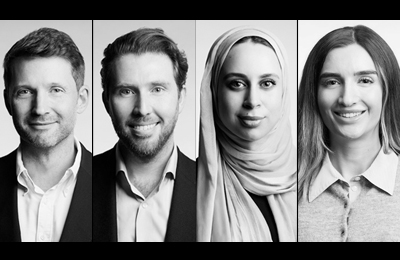
- Alastair Glover, partner, private wealth, Stephenson Harwood
- Jordan Ellis, partner, private wealth, Stephenson Harwood
- Yasmin Amin, trainee solicitor, private wealth, Stephenson Harwood
- Molly O’Brien, paralegal, private wealth, Stephenson Harwood