




Variable Capital Companies: DIFC vs. Singapore
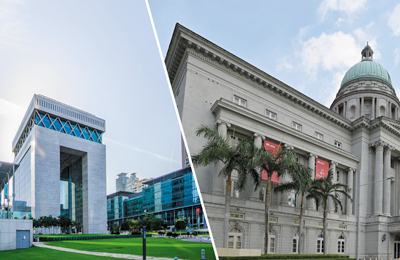
Trowers & Hamlins compares DIFC’s new VCC regime with Singapore’s established model, examining differing regulatory approaches and their appeal to global investors, fund managers and family offices.
The introduction of the Variable Capital Company (“VCC”) Regulations in the Dubai International Financial Centre (DIFC) in February 2026 reflects a broader shift in global capital flows, with the UAE attracting increasing numbers of high and ultra-high-net-worth individuals (“UHNWI”) and strengthening the DIFC’s role in asset management, family offices, and alternative investments.
Singapore, by contrast, introduced its VCC regime in 2020 and has since developed a well-established ecosystem. Supported by a large base of licensed fund managers, experienced service providers and a robust regulatory environment, it has become a leading global domicile for investment funds.
While both jurisdictions offer VCC frameworks based on similar principles, they reflect distinct regulatory approaches and target different market segments.
COMPARATIVE ANALYSIS: SINGAPORE VCC VS. DIFC VCC
A comparison of the two frameworks across 6 key criteria is given below.
1. Governing legislation
- In Singapore, VCCs are governed by the Variable Capital Companies Act 2018 (the “VCC Act”), which operates alongside the Companies Act 1967, subject to specific modifications. This establishes a bespoke regime anchored in Singapore’s broader corporate and regulatory framework.
- The DIFC adopts a hybrid approach, grounded in the Companies Law 2018 (notably Articles 132 and 151) and supplemented by the VCC Regulations 2026. The regime combines core corporate law (“the Relevant Laws”) with overlaying regulatory requirements imposed by the Dubai Financial Services Authority (“DFSA”).
2. Permitted strategies and use cases
- It is important to note that the Singapore VCC and the DIFC VCC are not, at their core, built for the same primary use cases. They are vehicles designed for different user profiles, operating within different regulatory philosophies, and targeting different pools of capital.Under Section 15 of the VCC Act, a Singapore VCC is restricted to operating as a collective investment scheme as defined under the Securities and Futures Act 2001 (the “SFA”). This reinforces the VCC’s role as a dedicated investment fund vehicle rather than a general-purpose corporate structure.Singapore’s 13O and 13U tax incentive regimes, extensive double taxation treaty network, and GST remission framework are all specifically structured to support this sector.Whilst the VCC offers segregation between sub-funds which is statutorily recognised, Section 32 of the VCC Act provides that a sub-fund of an umbrella VCC does not have a separate legal personality; however, the VCC may sue or be sued in respect of that sub-fund. Furthermore, each sub‑fund is treated as a distinct legal person for the purposes of set‑off between sub‑funds, and the property of a sub‑fund may be made subject to court orders as if the sub-fund were a separate legal person. Finally, Section 33(1) of the VCC Act provides that each sub‑fund may be wound up on a stand‑alone basis as if it were a separate legal person.
- The DIFC VCC has been developed with a broader set of use cases in mind, particularly in relation to private capital. Its flexibility, coupled with the absence of a mandatory fund manager requirement in certain scenarios, makes it well suited to family offices, proprietary investment platforms and UHNWIs particularly those with a nexus to the UAE looking to apply different strategies to different segregated cells. In this respect, the DIFC VCC is more comparable to a sophisticated private investment holding vehicle than to a traditional investment fund.Regulation 4.1.2 of the DIFC VCC Regulations 2026 provides that, unless authorised by the DFSA, a VCC or any incorporated cell is restricted to acting as a holding company. A DIFC VCC may passively hold a wide range of proprietary assets without DFSA authorisation, provided it does not engage in regulated financial services activities, thereby clearly delineating between regulated fund activity and unregulated proprietary investment.The incorporated cell is a particularly interesting feature of the DIFC VCC, which is not present in the Singapore model. Each incorporated cell has its own separate legal personality whilst benefitting from shared governance infrastructure at the umbrella level. It can therefore be used as a discrete legal vehicle, with its own governance, its own asset pool, and its own liability ring-fence, for a different branch of the family or a different stage of the generational transfer plan.The DIFC Protected Cell Company (“PCC”) structure could be regarded, in certain respects, as a closer analogue to the Singapore VCC than the DIFC VCC. Both the Singapore VCC and the PCC operate as umbrella vehicles in which the assets and liabilities of individual sub‑funds or cells are statutorily ring‑fenced, while those cells do not possess separate legal personality. In addition, each is primarily conceived as a regulated fund structure, typically requiring the appointment of a licensed or authorised manager and operating within a defined regulatory framework.
3. Licensing perimeter & exemptions
- Section 46 of the VCC Act requires a Singapore VCC to appoint, at all times, a permissible fund manager, being (a) a holder of a Capital Markets Services licence (“CMSL”) for fund management under the SFA or (b) a person exempted from holding such a license under the relevant legislation.This embeds the VCC firmly within the regulated asset management ecosystem and reflects its primary use as a fund vehicle.
- A DIFC VCC may not carry on financial services without DFSA authorisation, and as such no licensed manager is required to be appointed for such VCC where it is used solely for proprietary investment holding.Where a VCC does not qualify as an “Exempt VCC”, it must appoint a corporate service provider for administrative and compliance functions.
4. Corporate and capital structure flexibility
- A Singapore VCC is a body corporate incorporated under the VCC Act that can be structured as a standalone VCC or an umbrella VCC with two or more collective investment schemes operating as its sub-funds.A Singapore VCC is permitted to issue multiple classes of shares, provided that the rights attaching to each class are clearly set out in its constitution, including rights relating to voting, dividends and redemption.Section 19(4)(e) of the VCC Act requires that the constitution set out the details of the rights of holders of shares to participate in or receive profits, income or other returns derived from the VCC’s property.Section 19(1)(d) of the VCC Act implies into every VCC’s constitution the fundamental principle that the actual value of the paid-up share capital of a VCC shall at all times be equal to its net asset value (“NAV”), ensuring the capital structure continuously reflects the value of its underlying assets.However, section 19(1)(g) read together with 19(1)(e) stipulates that during the initial offer period, shares of the VCC need not be issued, redeemed or repurchased at a price equal to the proportion of the net asset value of the VCC represented by each share.
- A DIFC VCC is a private company that can operate as a standalone entity or as an umbrella structure with either segregated or incorporated cells, although it cannot utilise both simultaneously.A DIFC VCC may issue multiple classes of shares and, where a cellular structure is adopted, separate classes of cell shares, with the rights attaching to each class set out in its articles of association. These rights may include voting, dividend, redemption and priority rights linked to particular non-cellular or cellular asset pools.The framework requires a VCC’s capital structure to reflect the value of its underlying assets. Regulation 4.3 of the VCC Regulations 2026 mandates that the articles of association contain provisions requiring that the value of the paid-up share capital of the VCC is, at all times, equal to the NAV of the VCC. Share values must also be calculated based on the NAV of the relevant non-cellular assets or cellular assets (as applicable). Segregated cells are therefore shielded from the performance of other cells.
5. Redemption and Dividend Rules
- Unlike companies incorporated under the Companies Act 1967, a Singapore VCC may redeem its shares and make distributions out of capital, provided its constitution permits this, rather than being limited to distributions out of accounting profits. This reflects the VCC’s design as a variable capital fund vehicle, where investor subscriptions, redemptions and distributions are typically made by reference to NAV rather than a fixed paid up capital base.Shares may only be redeemed or repurchased if fully paid, as required by section 35(2) of the VCC Act. As mentioned above, the price at which shares must be redeemed or repurchased, being a price equal to the proportion of the VCC’s net asset value represented by each share (subject to fees and charges as provided in the constitution), is an implied term of every VCC’s constitution by virtue of section 19(1)(e) of the VCC Act, ensuring equitable treatment of all shareholders.Following any redemption or repurchase, Section 35(4) requires the shares to be cancelled, and the issued share capital reduced accordingly, which ensures the VCC’s capital continuously reflects the value of its underlying assets.
- The VCC Regulations 2026 allow distributions out of capital, provided the relevant asset pool remains solvent and maintains a positive NAV. Regulation 6.3 specifically requires that a distribution must not reduce the NAV of the relevant non-cellular or cellular asset pool below zero.In a cellular structure, this is applied at each cell level, enabling dividends to be declared for a profitable cell independently and reflecting the DIFC’s ring-fencing principle relevant to each cell.This is a particularly important feature for investment vehicles that generate returns primarily through capital growth, asset realisations, or returns of invested capital, rather than through regular income streams. It further enhances investor liquidity as investors can receive distributions even where profits or retained earnings are insufficient. By allowing solvent capital distributions the VCC model can also reduce administrative burden and transaction costs that would otherwise arise from court-approved or shareholder-approved capital reduction mechanisms.The issue and redemption of shares are likewise linked to NAV. Regulation 6.1.3 requires shares to be issued and redeemed based on the relevant asset pool’s NAV.Redeemed shares are typically cancelled, reducing the capital of the relevant asset pool and ensuring the VCC’s capital structure at both umbrella and cell level continues to reflect the value of its underlying assets.
6. Suitability for Digital Asset Strategies
- Singapore has developed a comprehensive regulatory framework for digital assets. A Singapore VCC may hold digital assets as part of its investment strategy, subject to the SFA and applicable MAS rules.The fund manager of any VCC, including one investing in digital payment tokens (“DPTs”), must hold a CMSL for fund management (unless exempted), as the management of a VCC constitutes the management of a collective investment scheme under the SFA.Separately, any entity providing DPT services (such as dealing in, exchanging, or providing custody of DPTs) must be licensed under the Payment Services Act 2019.Singapore’s regulatory clarity and treaty network make it well-suited for institutional-grade digital asset strategies with cross-border investor bases, though MAS has maintained a cautious approach to retail-facing crypto exposure.
- The DIFC has enacted the Digital Assets Law 2024 (DIFC Law No. 2 of 2024), which provides one of the most comprehensive legal frameworks for digital assets in the region. The DFSA’s Crypto Token Regime permits DFSA-licensed entities to carry on regulated activities relating to crypto tokens. A DIFC VCC operating as a proprietary holding vehicle may hold digital assets, including crypto tokens and tokenised assets, without DFSA authorisation, provided it does not carry on regulated financial services activities in relation to those assets.This makes the DIFC VCC particularly well-suited for family offices and proprietary investors seeking to consolidate digital and traditional asset portfolios within a single, ring-fenced structure.
Text by:

- Abdulhaq Mohammed, resident managing partner, Singapore, Trowers & Hamlins
- Nick Green, partner in international corporate and commercial, Trowers & Hamlins
- Shiladitya Majumdar, senior associate in international corporate and commercial, Trowers & Hamlins
- Saravanan Rathakrishnan, senior associate in international corporate and commercial, Trowers & Hamlins
- Henry Watson, trainee solicitor in international corporate and commercial, Trowers & Hamlins