




People, process, progress
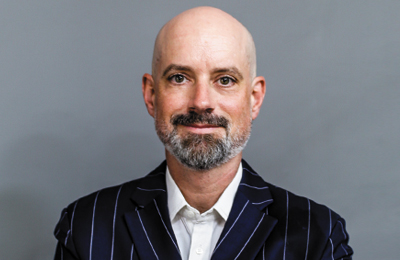
Dr. Florian Koemm of Siemens Energy shares his views on trust, transformation and the changing skills of the modern in-house lawyer in an age of AI.
As legal departments navigate rapid technological change, the focus is increasingly shifting from traditional advisory work to the design of smarter and more efficient operating models. In this edition of In-house Insights, we speak with Dr. Florian Koemm, global head of legal & compliance operations at Siemens Energy, about his journey from regional general counsel roles to leading a global operations function, the responsible adoption of AI, the importance of standardisation and the leadership principles that continue to shape his approach today.
1. Your career has taken you from Munich to Erlangen, New York and now Dubai. How has this journey shaped your approach to leading global legal and compliance operations?
What I learned along this journey is that there is no single “right way”. There are many different approaches that lead to success depending on the personalities, cultures and circumstances involved. This is equally true when leading people or managing a technological transformation such as the introduction of artificial intelligence into legal and compliance work.
2. What motivated your transition from regional GC roles into a global operational mandate, and how does your earlier advisory experience inform your leadership today?
Throughout my career, I have always created or re-built organisations, and I have always been enticed by doing something new. In that sense, it is a continuation of a familiar pattern. What makes it special and very exciting is that for the first time in my professional life, I have moved from roles that are part of the system to a role that is actively designing the system in which legal and compliance professionals work at Siemens Energy.
3. As global head for legal & compliance operations, what are the core priorities of your role, and how do they differ from your previous role overseeing the Middle East and Africa?
The difference between an operational role and an advisory one is obvious. I am no longer responsible for providing content, but infrastructure. The core priorities of my role as global head for legal & compliance operations are twofold: to make the work of our legal and compliance professionals as smooth and easy as possible and at the same time ensure that the work products of these professionals are delivered as effectively as possible to our business partners. We want to create the best legal and compliance experience for everyone at Siemens Energy.
4. Siemens Energy operates across highly diverse markets. How do you ensure consistency and alignment in legal and compliance operations worldwide?
Consistency can only be achieved through standardising work, which in the past was close to impossible considering the diversity of legal and compliance work, particularly when it comes to project business, as well as the diverse ways of working of the individuals involved. I believe that through the emergence of artificial intelligence, or more precisely, large language models, this has changed. However, it would be a mistake to simply throw technology at a given – unstructured and unstandardised – situation and believe that this resolves anything. This is why we work very hard to understand and map how we work in our teams, standardise these ways of working wherever and to the extent feasible, and then look for solutions to automate them.
5. How do you balance global standardisation with the need for regional flexibility, especially in markets with rapidly evolving regulatory environments?
As I said in my answer to question number 4, we will only standardise to the extent feasible. If standardisation is not feasible due to regional requirements, we will not standardise and will instead allow the necessary flexibility.
6. How do you assess the current maturity of AI tools in the legal and compliance space, and where do you see the most meaningful impact?
I think the overall maturity level of the tools themselves is already quite high, with the small caveat that there are still too many “legal-specific” tools out there. I believe that the future, particularly for in-house departments, lies in leveraging the standard IT or AI infrastructure available within a corporation for legal and compliance purposes. In this way, we maximise scale.
7. What is your philosophy on integrating AI into legal workflows? In your view, what safeguards and governance structures are essential when deploying AI within legal teams?
The philosophy is very simple: understand your workflow, stop what can be stopped, optimise what needs to be optimised, standardise to the extent feasible and then automate where possible. The most important safeguard at this moment of hype is to understand how the technology works and use it appropriately.
8. What skills do you believe future in‑house lawyers must develop to thrive in an AI‑enabled legal environment?
First, the future in-house lawyer needs to accept that the role will change and redefine the value it brings to the organisation. For example, this could particularly be evident in the negotiation situation. However, I believe that legal arguments will rarely be exchanged in this situation anymore, as this may be done by a machine. As a result, skills in psychology and the ability to win the other side over may become far more important than in the past.
9. Given your experience across Europe, the US and the Middle East, what qualities do you value most in external counsel?Trustful cooperation. We hire external counsel only in high-stakes situations and these require trust. The most important element of this is that the external counsel needs to put me in the best position to forecast and control the (at times very significant) cost incurred.
10. You chair Siemens Energy’s Global Disability Inclusion and Allies Network. How does this work influence your leadership philosophy within the legal function?
I approach leadership as a service mandate to my team members and the company. This is a general principle I try to follow every day (although it is ultimately for others to judge how successfully I do so) and it surfaces in my engagement for the network. But it was there before. The work in the network itself has not influenced my leadership. Rather, it is this principle that influenced both my work in the Network and my broader leadership philosophy.
11. Across your global career, is there a project or turning point that significantly shaped your approach to legal leadership? Not a project or a turning point, but people. The most influential was probably Ann Fairchild, CEO and president of Siemens USA. She influenced my work and leadership approach in three key areas.
First, she is an absolute role model in balancing assertiveness in decision-making with empathy for team members and colleagues. Finding that balance is one of the hardest things to do as a leader, and what Ann taught me is that it requires conscious and deliberate effort. It does not happen automatically.
Second, as her employee, I learned how important it is to have a manager who provides honest, open and constructive feedback internally, while always standing behind their team externally. I try to replicate that approach with my own team members every day.
Finally, I saw how important reliability is for the wellbeing of employees. In my communication with my team, I am careful not to overpromise while still being ambitious about what we are trying to achieve. When goals are ambitious and outcomes uncertain, it is important to be transparent about that reality and communicate it clearly.
12. What key lessons have stayed with you throughout your career and continue to guide your decision making today?
I believe that it is always better to make an active decision than to avoid decision-making and just let things passively run its course. Pointing out that something was the “wrong” decision is Monday morning wisdom – bad outcomes tend to happen when no decisions are taken at all.